4x4 Rooftop Tent Car Rental in Rwanda & Uganda
Rwanda and Uganda suit self-drive camping better than most of East Africa. Both countries are compact, with good tarmac between major centres, and their top attractions (mountain gorillas, chimpanzees, savannah wildlife, volcanoes, lakes) sit within a day’s drive of one another. A fully equipped 4×4 with a rooftop tent lets travellers cover that ground at their own pace, sleep in national parks and campsites, and spend considerably less than on a lodge-based itinerary. The trade-off is that you take on navigation, vehicle care and logistics yourself.
The Vehicles
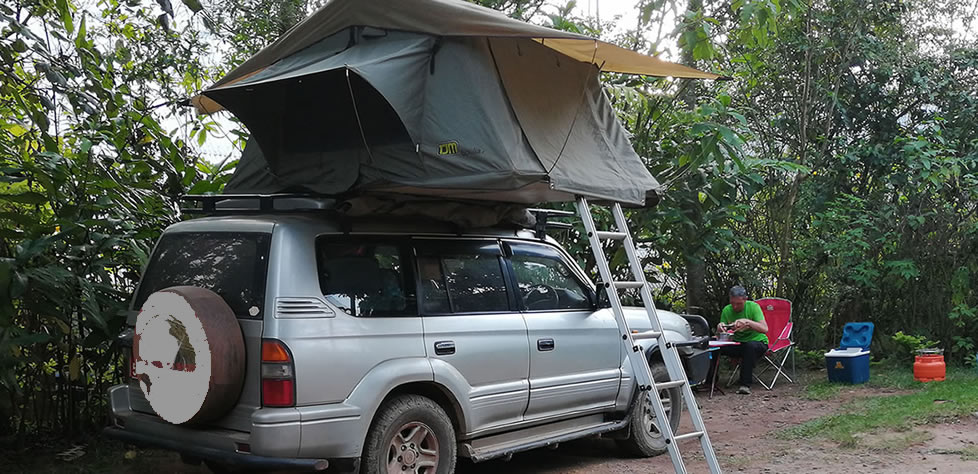
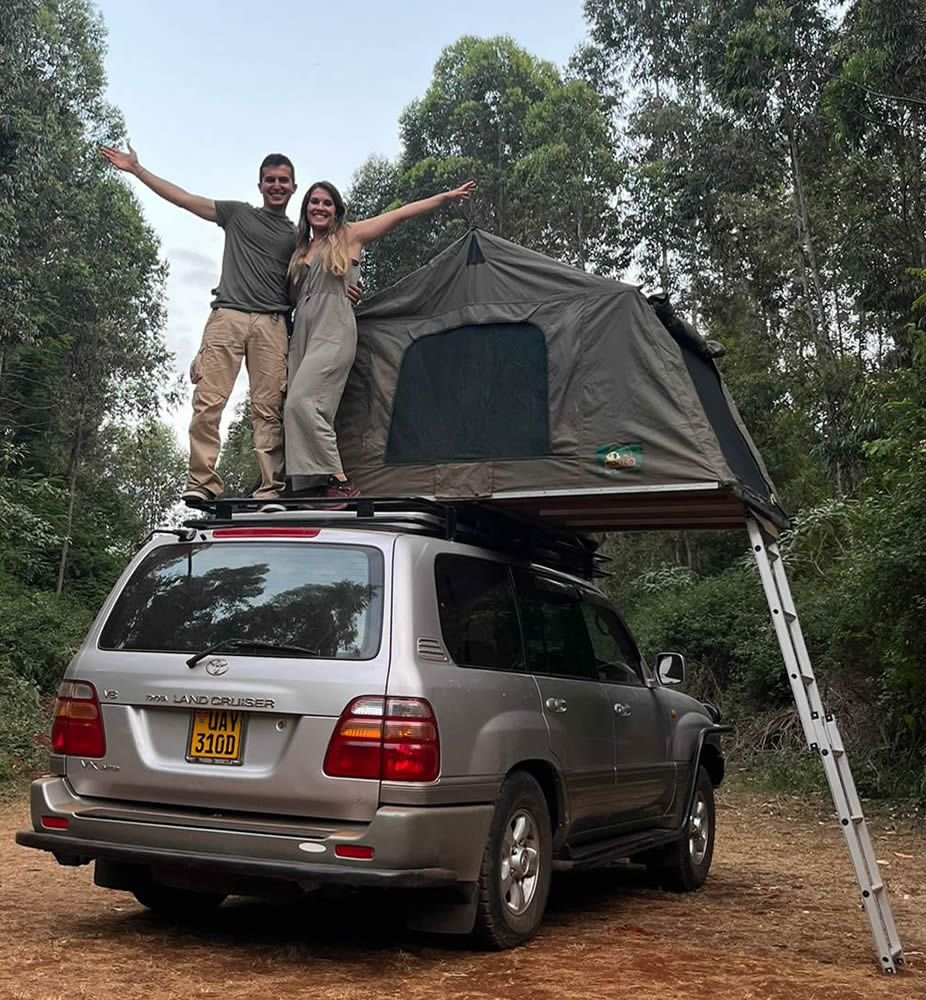
The standard rental is a Toyota Land Cruiser (the 70 or 79 series, or a Prado), or a Hilux double cab, fitted with a roof-mounted tent. Most operators supply a complete kit: a two- to four-person rooftop tent with mattress and ladder, folding table and chairs, a gas stove, cookware, cutlery, a fridge or cool box, jerrycans for water, a recovery kit (shovel, tow strap, traction boards, jack), a spare tyre or two, and sometimes a second battery or solar charging. Many include an air compressor and a basic tool kit.
Rooftop tents have real advantages. They set up in a couple of minutes, keep you off wet or uneven ground, and give some separation from ants, mud and, to a degree, curious animals. They are not a defence against large wildlife, though, so the rules about food storage and not wandering at night still apply.
Is It Right for You?
Self-drive camping suits confident drivers who enjoy independence and are happy to handle setup, cooking and problem-solving. If you would rather not, we offer guided camping safaris with a driver-guide, a cook and pre-arranged campsites, which remove the logistics while keeping the budget lower than lodge-based trips.
Either way, book vehicles and permits early, communicate clearly with our team about route plans, and build slack into the itinerary. Distances look short on a map but take longer on the ground, and the unhurried pace is much of the appeal.
4×4 Safaris – Rwanda and Uganda
Rwanda Routes
Rwanda’s roads are among the best in the region, and the country is small enough that most routes are a few hours’ drive.
Volcanoes National Park is the headline destination, home to mountain gorillas and golden monkeys. Camping inside the park is limited, so travellers typically use nearby campsites in the Musanze area and do the trekking as a day activity. Gorilla permits are expensive and sold through the Rwanda Development Board, so book well ahead.
Akagera National Park, in the east, is the main camping draw. It has Big Five wildlife (lions and rhinos were reintroduced), lakes, hippos and a network of game-drive tracks. The park has dedicated campsites, including lakeside options, and a self-drive visit is straightforward.
Nyungwe Forest National Park in the southwest offers chimpanzee tracking, canopy walks and an enormous variety of primates and birds, with camping available at or near the park.
Lake Kivu along the western edge makes a restful end to a trip, with lakeside campsites and lodges at Gisenyi (Rubavu), Kibuye (Karongi) and Kamembe (Rusizi).
Uganda Routes
Uganda is larger, rougher at the edges and more varied, which suits a 4×4.
Queen Elizabeth National Park combines savannah, crater lakes, the Kazinga Channel and the tree-climbing lions of Ishasha. Murchison Falls National Park offers the powerful falls on the Nile, boat trips and strong game viewing north of the river. Bwindi Impenetrable National Park is the other major gorilla destination, reached by steep, winding roads where a capable 4×4 is a real asset. Kibale Forest is the leading chimpanzee-tracking site. Lake Bunyonyi, near Kabale, is a favourite for lakeside camping and canoeing. Kidepo Valley National Park in the far northeast is remote and spectacular, rewarding the few who make the long drive.
Border Crossing and Paperwork
The common cross-border route is Kigali to Kabale via the Katuna/Gatuna crossing, which links Rwanda’s south with Uganda’s southwest and the Bwindi region. Other crossings include Cyanika near Musanze.
For a rental vehicle you will typically need the original vehicle registration or an operator letter authorising cross-border travel, valid insurance covering both countries, a Temporary Import Permit or equivalent, a valid driving licence (often with an International Driving Permit recommended), and your passport. Visa rules and any East Africa Tourist Visa arrangements change, so check current requirements before travel. Ask your operator which documents they provide and which you must arrange yourself.
Safety and Practical Realities
Driving standards differ from what many visitors expect. In Uganda especially, expect heavy truck and boda-boda (motorcycle taxi) traffic, speed bumps, unmarked hazards and poor visibility at dusk. Avoid driving after dark where possible. Rwanda is generally calmer, with strictly enforced speed limits and no plastic bags permitted.
In parks, keep to marked tracks, follow ranger guidance and never leave the vehicle near large animals unless permitted. At night, stay close to camp, keep food sealed and stored in the vehicle, and treat hippos, buffalo and elephants with respect. Security has been good in the main tourist areas, but check government travel advisories, particularly for border regions and remote northern areas.
Practical points: carry offline maps, cash in local currency for rural areas, a spare phone battery or power bank, and enough water. Get comprehensive insurance with a reasonable excess, understand what is excluded (often tyres, windscreens and underbody damage on rough tracks) and inspect the vehicle thoroughly before accepting it.
Choosing a Season
The drier months, roughly June to September and December to February, offer the easiest driving and best wildlife viewing. The rainy seasons (March to May and October to November) turn dirt roads to mud and make camping less comfortable, though the landscape is greener and prices are often lower. Gorilla trekking is possible year-round but is harder on wet, steep trails.