Auto Rentals Rwanda
Self-Drive Safaris to Queen Elizabeth National Park from Rwanda
Rent a 4×4 car for cross border safaris from Rwanda to Uganda for affordable self drive safaris. Queen Elizabeth National Park is one of Uganda’s most rewarding wildlife destinations, and it sits within easy reach of Rwanda. Because the park lies in the far west of Uganda, close to the Rwandan border, it pairs naturally with a gorilla trek or a visit to Kigali. Many travelers combine the two, and self-driving the route gives you the most flexibility.
Getting There from Rwanda
The most common self-drive route begins in Kigali and crosses at the Cyanika border post, near the town of Kisoro. The drive from Kigali to Cyanika is roughly 115 kilometers and takes three to four hours, depending on traffic and stops. From Cyanika, it is about 22 kilometers to Kisoro, and from there you continue through the Kigezi Highlands toward Kanungu and the Bwindi area. From Bwindi, the most direct approach to the southern Ishasha sector is the Kihihi road, which is largely murram (dirt). Several operators describe an 81-kilometer murram route through the park from Kihihi, so this is a stretch that calls for a high-clearance 4×4 and a careful pace, especially after rain.
The alternative is the Katuna border crossing, located on the main Kigali to Kabale road. The drive from Kigali to Katuna is about 95 kilometers. From Kabale you head west through Mbarara and Ishaka to the Katunguru gate on the northern side of the park. This route is largely paved and is often the easier option for a first-time self-drive, though the total journey is longer. Whichever route you choose, allow a full day for the transfer. Set off early, avoid driving after dark, and plan to reach the park with daylight to spare. Road conditions and border procedures change, so confirm the latest advice before you travel.
Practical Requirements for a Self-Drive
Travelers need a passport valid for at least six months and a visa for each country. Uganda and Rwanda both offer visas online, and the East African Tourist Visa covers Uganda, Rwanda, and Kenya for travelers who want to visit all three. Check the current requirements for your nationality with the Ugandan and Rwandan immigration authorities well before you go, because the rules have changed over time.
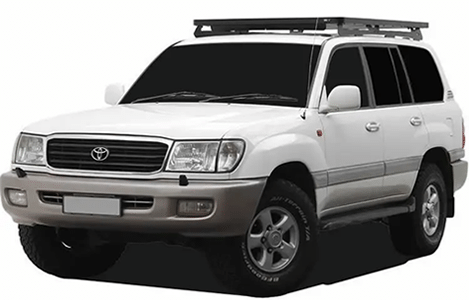
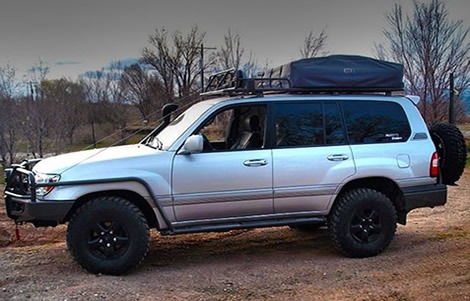
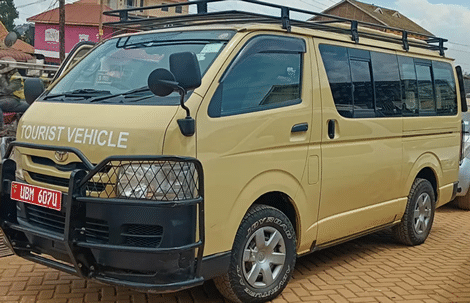
Your home driving licence should be accompanied by an International Driving Permit, which is valid in both countries. Rental companies in Kigali and Kampala typically offer 4×4 vehicles such as the Toyota RAV4 or Land Cruiser, and a 4×4 is strongly recommended for the murram stretches and for the game drives inside the park. Make sure your rental includes insurance and check the fuel situation before you enter the park, since fuel can be scarce in the more remote areas.
Park entry is managed by the Uganda Wildlife Authority, and fees for non-residents are significant and charged per day. Game drives within the park are self-guided or accompanied by a guide, and both options are common. Keep in mind that the roads inside the park are narrow in places and shared with buses and trucks passing through.
Where to Stay
Accommodation in Queen Elizabeth ranges from budget campsites to comfortable lodges, and the best choice depends on where you want to be.
On the Mweya Peninsula, which juts into the Kazinga Channel, you will find Mweya Safari Lodge, a well-established lodge run by the Uganda Wildlife Authority with a view over the water and convenient access to the boat cruises. This is a good base for a first visit and gives easy access to the channel and the central plains.
For a more upmarket experience, Katara Lodge sits on the northern rim of the park with sweeping views over the savannah and crater lakes. Kingfisher Lodge and Jacana Safari Lodge are other well-regarded options near the channel.
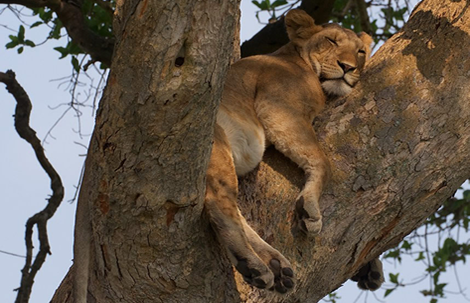
If the tree-climbing lions are your priority, base yourself in the Ishasha sector. Ishasha Wilderness Camp offers tented accommodation in the south of the park, and staying there lets you go out for early drives when the lions are most likely to be active.
Kyambura Gorge Lodge, on the eastern edge of the park, is a good choice for travelers interested in chimpanzee trekking and gorge walks. Pumba Cottages, which overlook the Rift Valley, offers a quieter, more rustic stay.
Budget travelers will find simple options, including the Mweya hostel near the peninsula, Queen Elizabeth Safari Camp, Topi Lodge, and Kazinga Channel View Resort. Several of these are on the edge of the park or in nearby towns, and they provide good value for a short stay. Most lodges can arrange game drives and boat trips, so you can book these alongside your room.
What the Park Is Famous For
Established in 1952 and covering roughly 2,000 square kilometers, Queen Elizabeth is Uganda’s most visited savannah park. It sits on the Albertine Rift, a landscape of crater lakes, swamps, savannah, and forest. The equator crosses the park, and visitors often stop at the marker on the road. Its most celebrated attraction is the population of tree-climbing lions in the Ishasha sector in the southern part of the park. Lions here rest in the branches of fig trees, a behavior seen in only a few places in the world. Sightings are never guaranteed, but the odds are good in the early morning and late afternoon, when the lions are most active and easiest to spot from the road.
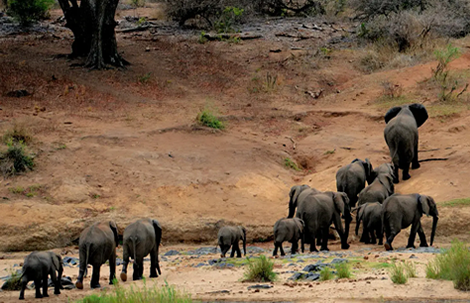
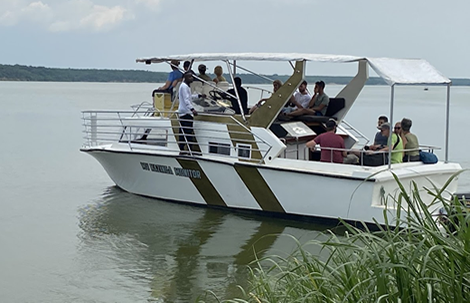
The Kazinga Channel is the park’s other signature experience. This waterway links Lake George and Lake Edward and is one of the best places in Africa for a boat cruise. Hippos crowd the banks, crocodiles bask on the mud, and the channel draws large herds of buffalo and elephant to drink. Cruises run from the Mweya Peninsula and are among the most relaxing ways to see wildlife without a vehicle.
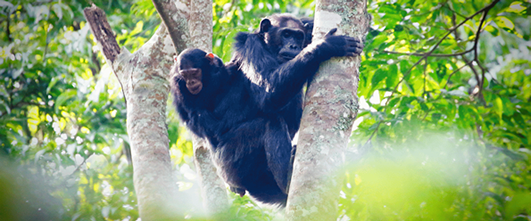
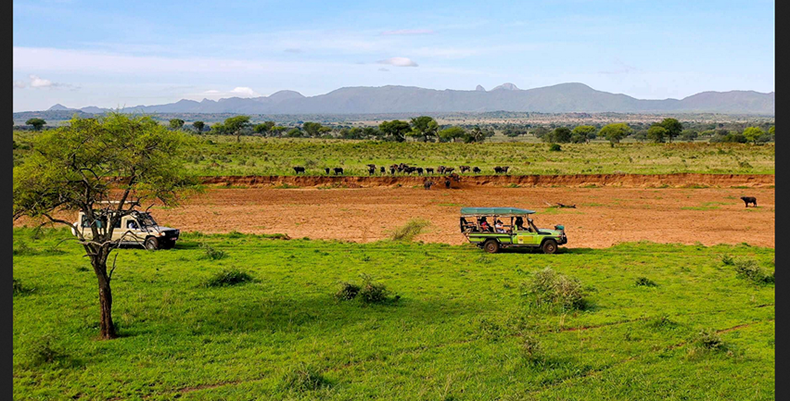
The Kasenyi Plains, in the north of the park near Lake Edward, are known for lion, Uganda kob, and large herds of buffalo and elephant. Early morning drives here are a classic highlight. The Kyambura Gorge, a deep forested ravine, is home to a habituated chimpanzee community and offers a rewarding trekking option.
Birdlife is exceptional, with more than 600 recorded species across wetlands, forests, and savannah. Wildlife in general is abundant: visitors can expect elephants, buffalo, Uganda kob, waterbuck, warthog, hippo, and a good chance of lions, leopards, and hyenas. Rhinos are not present.
Chimpanzee tracking is also possible in the nearby Kalinzu Forest, which lies between Queen Elizabeth and Bwindi. Many itineraries combine a day of chimp trekking there with the park’s game drives.
When to Visit
The park is open all year, but the best conditions depend on your priorities. The dry seasons run from June to September and from December to February. During these months the vegetation thins out, animals gather around water sources, and game viewing is at its most reliable. Roads are also in better condition, which matters for the murram sections.
The wet seasons fall from March to May and from October to November. The landscape is lush and green, the bird life is especially active, and there are fewer visitors and lower prices. Some roads become difficult, and wildlife is more widely dispersed, so sightings can take more patience. Many experienced visitors prefer the shoulder months for the quieter atmosphere and the chance to see migrant birds.
For a first trip, aim for June through August or late December through January. These months give the most dependable game drives and the best chance of seeing lions in the Ishasha sector.